Skip to content

Posts tagged ‘del maguey’

Celebrating Pierde Almas’ pechuga in Chichicapam

I had the extreme honor of being invited to a party to celebrate the release of Pierde Almas’ new pechuga. It was held at the palenque in Chichicapam where, last year, I had attended another party and well, we’ll just say, consumed way too much mezcal.

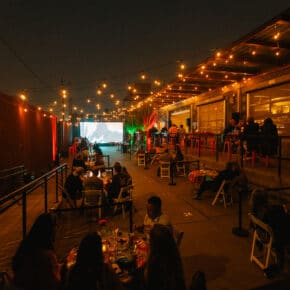
This year’s party was more formal, with tables covered in white linens and food prepared by the chef from Oaxaca’s Pitiona restaurant. A pig was being roasted, and a special salsa was being prepared from the fruits used in the pechuga’s distillation. It was also a chance to meet Jonathan Barbieri, the owner of Pierde Almas, and to hang out with the brothers Sanchez, who make the mezcal. There were also several importers, and much to my surprise, Josh Harris, from Bon Vivants in San Francisco. He and I have exchanged emails, but never have met in person.

Miguel Sanchez overseeing the conejo

In addition to this year’s pechuga (a heady combination of spice, sweet and just a smidge of savory) there was also a new mezcal that had been made with the traditional gin herbs in its third distillation. I am not a gin drinker so my best evaluation is that it tasted exactly like gin has always tasted me (cloying), with an undercurrent of a strong espadin.

There was a band playing as we ate. I sat at the table with Miguel Sanchez and Domingo Orollo who is overseeing the gin mezcal project. He was involved in the creation of Del Maguey’s Vida and is a chemist by trade. This is a growing trend – more chemists becoming involved with mezcal production.

I was driving that day, a deliberate choice to ensure there would be no repeat from last year’s drunken revelry. It is a running joke between Alfonso and I – that after last year’s insanity, and my mother’s presence, that she has forbidden me from ever drinking with him again.


Prepping the hare

As the sky began to darken, we moved from one part of the palenque to another where the stills are located, in order to watch Alonso start the process of distilling this year’s conejo (a pechuga, except with a wild hare instead of a turkey.) We watched as Alfonso measured out the spices (a turbinado style sugar, anise), fruits (apple, banana, pineapple), rice and then finally the hare placed in a cheesecloth bag with yerba santa. The fermented maguey was loaded into the still, along with the other ingredients (the conejo bag would hang above the mix) and then sealed. It would distill all night long.

Alfonso Sanchez measuring ingredients

The music began again, more people arrived, including La Señora Sanchez and the other female relatives – sisters, wives, nieces – and we danced. Finally we left so as not to be on the road too late at night. We gave Domingo a ride back to the city, talked more about chemistry in mezcal, and the plans awaiting us that night (Austin TV at Café Central or La China Sonidera at Txalaparta.) Perhaps the best part of having Domingo in the car with us was having him navigate the new highway (the one that will eventually go all the way to Puerto Escondido) that circumvents Ocotlan and cuts the return time almost in half. It puts you on a road that has reflector lights, a smooth surface and is blissfully free of topes.

SF Cocktail Week – Jumpstarting with mezcal

I definitely see the possibilities of a regular mezcal Monday.  Last night it was at Rio Grande on Market Street—a kickoff of sorts for SF Cocktail Week and hosted by Ryan Fitzgerald, former Beretta star bartender/mixologist, driving force for the Tequila Interchange Project (TIP), and now western sales rep for Del Maguey.

The $20 entry fee (all proceeds going to TIP) got you an evening of mezcals, mezcal cocktails, beer ,and tamales. Pierde Almas, Alipus, and Del Maguey were being poured. I am still trying to embrace cocktail culture – I’ve always liked my drinks neat, or as minimally embellished as possible but, in the spirit of cocktail week, I asked for a mezcal variation on an Old Fashioned.

Crushing ice from block by hand 

It was still early, the crowd small, the bartender carefully scraped ice from an ice block on the bar, then lovingly measured, poured, and stirred my drink as I replayed Mr. Mixologist over and over in my head.

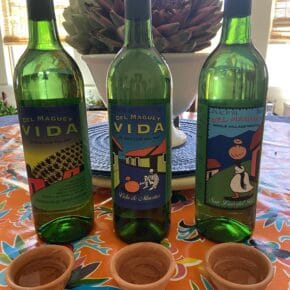
Del Maguey’s Vida is the bartenders’ choice for mezcal cocktails. It’s versatile and works with just about anything as we’ve previously written. I think in the coming year or so, Puritita Verda (Pierde Almas’ lower price point mezcal) will give Vida a run for the money.

The variation on the Old Fashioned was good – I prefer cocktails that have a more savory flavor. To go the opposite extreme, I asked the bartender to mix a mezcal variation of a lemon drop. I was hoping it could come close to that sublime lemongrass infused mezcal I had in Oaxaca last spring. Sadly the cocktail was far too sweet for my palette and the mezcal was completely overpowered by the citrus.

I tracked down Ryan to get an update from him on NOM-186, which is still making its way through the channels in Mexico. TIP has been at the forefront making recommendations and counter proposals to help ensure that some of the more draconian parts of it (the branding of the word agave for one) are modified and that small producers aren’t completely SOL. We’ll have a more in-depth piece about this next week.

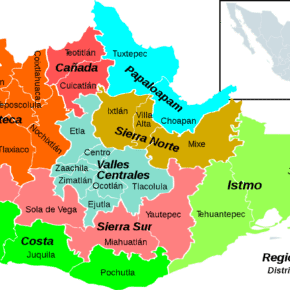
A sweet surprise to the night – a chance to try Tosba, a mezcal produced in the Sierra Norte in Oaxaca (a mountainous and heavily wooded area east of Oaxaca city) and not yet available in the US (though they are working on it). Mezcals from the Sierra Norte are not commonly found outside of the area. They are rumored to be made with the purest and sweetest water in Oaxaca. Tosba is a family operation, and Elisandro Gonzalez-Molina is the US face for the brand. He was pouring an espadin and a pechuga – both were delicious. The espadin was smooth, balanced, and earthy with an underlying finish of sweetness that hung on my lips. The pechuga was divine – with a complex layering of savory, subtle roasted maguey, and fruit.  I definitely put it in the top 3 of pechugas I’ve had. It was a great way to end the night.

As a heads up, I will be pouring mezcals at the Third I Filmmakers/VIP party this Saturday night at the Castro. On the table will be Pierde Almas, Del Maguey, Alipus, Metl, and the Tosba Espadin.  Of course we’ll also have a private reserve surprise. Tickets are still available!

Exciting Updates for July 25 Pop-up Mezcaleria

As we’ve previously posted, we’ll be hosting our first mezcal tasting in San Francisco on July 25th. We’ve got some pretty exciting news to share about the event. First, we’re thrilled to present the US premiere of Alipús and will be featuring their San Andrés mezcal made by Don Valente Angel. It will also be the first opportunity for people here in the Bay Area to taste the Metl Espadin, Madrecuishe blend made by Señor Don Lucas of Miahuatlan. You definitely want to be among the first to experience these new mezcals. Also in the line-up – Pierde Almas’ Dobadaan and Del Maguey’s Minero.

Additionally, we’re working with Oakland’s Tamarindo Restaurant on some great food pairings, including Tacos de Chicharron made fresh from El Taco Bike, and Tortas Ahogadas with a divine chipotle sauce. We’ll also be showcasing a brand new cocktail developed by Tamarindo that will feature the Wahaka Joven. And no party is complete without musical beats from DJ EKG.

For ticket information, please check here.

Max, Bricia and I are looking forward to seeing you!

The mezcal cocktail primer

There has been a mini-mezcal bubble in cocktails lately because bartenders have awoken to its potential and because it’s a good introduction to the distillate.  It’s a great backbone or compliment to a cocktail because of its body and complexity of flavor.  We’re almost absolutely sure that the majority of mezcal consumption in the United States goes into cocktails not only because that is how we drink the majority of spirits in the US but also because that’s the way mezcal is being promoted.  But the secret is that mezcal mixes well with almost everything, it really just depends on which mezcal you’re using and how much you want to foreground the mezcal taste.

Exhibit A is the classic margarita.  Instead of:

  • 1.5 0z tequila
  • 1 oz lime juice
  • .5 oz Cointreau

You can replace the tequila with a mezcal like Fidencio Sin Humo to get a smokeless flavor or Del Maguey Vida to get more of a full bodied agave flavor.  Even better, you can mix half your favorite margarita tequila with half mezcal for something truly distinctive.

The margarita is just the tip of the iceberg.  Mezcal mixes extremely well with any fruit based cocktail whether that be a fruit smash or the simplicity of a daquiri.  The agave flavor that mixes extremely well with sweet fruit and sour citrus.  But that’s just the beginning.

Over the past few months we’ve run through many experiments and have discovered that mezcal works exceedingly well in the full gamut of cocktails.  As a general rule if you’re making anything with a whiskey, scotch or tequila as its base, mezcal slots in as a perfect base.  The classic manahattan works with something like Fidencio Joven, Vida or Wahaka depending on the desired viscosity and flavor. If you find that a mezcal manhattan is overwhelmed by that agave flavor then try switching out the absinthe in a sazerac with a mezcal and see what happens.  In our experience it lends the drink a distinct and fascinating new life.  Not that the old one wasn’t worth living but since we live in an expanding universe you might as well grow with it.

If you’re making something gin or vodka based it really depends on whether and how much you like the flavor of mezcal showing through.  We’ve made mezcal martinis, mezcal and tonics, mezcal greyhounds and many more.  We’ve always found a way to make it work while acknowledging that this is the one instance where you may run into a wall.  Drinkers may prefer a rather flavorless alcohol base for these drinks, dislike the flavor of mezcal placed in such a primary role or simply love their gin or vodka.  If that’s the case the one gin cocktail we really recommend trying with mezcal is the negroni because the bitter campari and sweet vermouth are perfect mezcal partners.

But that’s just scratching the surface.  If you want to start innovating try the simple involution of tradition by taking the same proportions of the margarita, replacing the tequila with mezcal and lime juice with orange juice.  Instead of salting the glass rim use sal de gusano, Oaxaca’s classic mixture of ground up worms, chile and salt. This one glass combines the traditional serving of mezcal – you have a sip of mezcal, dip an orange slice in the sal de gusano and eat the flesh then continue your sipping and chatting.  This recipe relies on spice as a contrast to the flavor of mezcal and citrus.  That sort of foil whether it be salty, bitter, acidic or astringent provides critical balance to mezcal in cocktails.

Which mezcals to use in cocktails?

  • Del Maguey Vida – Somewhat smoky, heavy body and strong fruit
  • Fidencio Joven – Slightly smoky, lean body
  • Fidencio Sin Humo – Non smoky, lean body, slight fruit
  • Metl Joven – Mid-range alcohol and smoke.
  • Sombra – Strong alcohol, mid range smoke.
  • Wahaka Joven – Light and lean.  Not smoky.

There are many others but these tend to be the most widely distributed in the US marketplace and most reasonably priced for a cocktail bar.

Other mezcal cocktail recipes for your drinking pleasure:


Back to where it all began

The road to Teotitlan del Valle has changed a lot since I was first there in 2003. The pueblo sits off the main highway that heads south from Oaxaca toward the Istmo.  It’s only about 30 minutes from the city but my memory of the 2003 trip is that it took us much longer and it seemed like we were heading into the middle of nowhere.  Back then the road to the town was rutted and rough and, when we ended up going to taste the best mezcal our driver knew, the dirt road to the Del Maguey bodega seemed endless and long.

Not so today: Like so many excursions outside of Oaxaca there were wrong turns until finally we stopped and asked for directions from a very kind man in the centro of Teotitlan. Of course, you have to know that people will give you directions to a place even if they don’t know where it is – they just want to help. We finally arrived after more wrong turns and were greeted by the amazing team at Del Maguey, including Arturo and Francisco Martinez Martinez.

The operation has grown a lot since the last time I was there – the building that was once a small room now houses three rooms – an office, a storage area, and the bottling and waxing room (the tops of the Del Maguey bottles are dipped in a sealing wax, rather than the usual plastic wrap used by just about everyone else.) Given how successful Del Maguey has been in the US market, it is a surprisingly simple operation. And the road leading to the bodega, while still dirt and slightly rutted, is now dotted with buildings.

It is impossible to talk about artisanal mezcal in the US without mentioning Ron Cooper in the same sentence. His passion and perseverance in bringing his single village mezcals to the US has paved the way for everyone else, and certainly set the standard for quality. Del Maguey is one of the few brands in the market that is double organic certified, meaning that not only are the magueys that go into the process certified organic, but so is the mezcal making process itself. Given that the organic certification of the magueys often means certifying the entire community property of the pueblo where the maguey comes from, it is a huge task, and a huge point of pride for the brand. It also guarantees that the wild magueys known as silvestres growing in the zone are certified organic. For the actual mezcal making process, it means no air or chemicals or additives go into the process.

Del Maguey is distinct in many other ways, it’s part of the quirk  of the individuals that run these operations.  As another example, while some brands are re-planting silvestres, Del Maguey does not, and only harvests what grow wild on the pueblo properties, practicing responsible and sustainable techniques.  As Ron Cooper has said, “only God plants this.”

Francisco Martinez Martinez was full of information about Del Maguey’s process from field to bottle.  First, he reminded me that agave is a plant just like any other with seasons where the fruit is fully ripe and, since the process it truly artisanal, every step in mezcal production depends on a variety of factors.  During the rainy season (loosely June-August) it can be challenging. The colder weather impacts the mezcal making process – specifically related to attaining the desired alcohol level – the higher the grade, the harder it is to achieve it. The cold weather slows or stops natural airborne microbial fermentation. For Del Maguey and their mezcals, that means alcohol levels falling between 45-50%. Del Maguey and the Palenqueros they work with are  conscious about the flavors they strive for and lean toward a full bodied and bold flavor profile.  That’s not to say that they aren’t also wonderfully subtle in their flavors.

We also talked about some of the regional differences and challenges in growing maguey. The Valles Centrales (the pueblos surrounding Oaxaca on the valley floor) face challenges because of the cold mornings. While Del Maguey is headquartered in Teotitlan del Valle, the mezcal is not actually produced there, but instead comes from Santo Domingo Albarrados, San Juan del Rio, Chichicapam, and Santa Ana Taviche to name a few.  As Francisco said, “we make tapetes (truly beautiful hand crafted wool rugs) in Teo, not mezcal.”

But let’s get down to the nitty gritty of what we tasted…

We were very excited to taste one of their new products – their Santo Domingo Albarradas, aged for 60 days in barrels, enough to give it the flavor of a reposado, and a slight color change, but so very subtle. At 48%, it is quite the explosion of flavor in the mouth, and maintains its warmth as it slides down the back of the throat. I found it slightly less sweet than their non-aged Albarradas (which I think is a great dessert mezcal) and a little smoother.

As we were trying the mezcals, Don Francisco mentioned that several of the big mezcal companies are experimenting with making mezcal from the miel de agave – a less expensive and more industrial process, that gives the drink an essence of mezcal, but is very watered down. It also enables a factory to produce a lot more product – thousands of liters a month, vs the 2400 liters a year each of the palenques produce for Del Maguey. I also heard this from a few other people.  Chisme, “gossip,” about the industry is rampant here.

Next up were a few silvestres, including two new ones – a Papalome, which is similar to a Tobala, that I loved (talk about a flavor bomb in the mouth – wow! So complex, so strong and piquant, that finishes with a warm glow in the upper body), and a Tepestate, that was refreshing, smooth and sweet with a lovely almost watermelon flavor at the end. We also tried the Arroqueño (49%) that was so elegant and again smooth despite its alcohol punch, and the Tobala which was surprisingly light on the tongue and very herbal and green in its finish. Don Francisco had us try his personal favorite, the San Luis del Rio, and one I have had before. It’s a multi-layered mezcal, perfectly combining a sweet/sour flavor that stays with you for a while.

We finished with the granddaddy of them all – the Pechuga, produced only in the fall when the fruits used in the distillation are ripe in the mountains. I have come around to Pechugas in the past couple of years.  Initially I was resistant to embracing them fully because they are pretty cost prohibitive, both in Oaxaca and in other markets because of the time and complexity in their production process. But, when done well, as with the Del Maguey, have a deeply rich and complex flavor which has completely won me over.  That said I still drink relatively little Pechuga simply because it’s so expensive.

A side note about certifying the Pechuga mezcal organic: It took Del Maguey three years of work with the government and stacks of legal paperwork to get their Pechuga officially recognized and certified organic.  Not only that, a team of veterinarians were dispatched to the pueblo to draw blood from the chickens (pechuga can be made with either chicken or turkey) to ensure they were healthy and organic.

Once again, we found ourselves deliciously high on the mezcals we tried, and terribly hungry (how many times do I have to learn the lesson, eat first, then taste mezcal.) We stopped in Santa Maria Tule, home of the famous tule tree, and ate ourselves silly with grilled chorizo, onions, pork chops, lamb barbacoa, sopa de guias (the tender greens of the squash plant) memelas and quesadillas. It was quite simply, a perfect day.

The first taste

Mezcal in the Street in Oaxaca

It was 2003 on a stretch of road between the city of Oaxaca and Teotitlan del Valle. We’d hired a driver for the day to visit some weavers based in this Zapotec pueblo. It sounds luxurious, hiring a driver, but back then my Spanish was poor and the realities of second-class buses and colectivos (shared taxis) to get there seemed daunting. So three of us pooled resources and hired a driver, Tito, to act as guide for the adventure.

This was my first trip to Oaxaca, and I was drawn there by the promise of moles and colonial buildings and brilliant colors. This was how I often chose travel destinations. The fact that it was also timed with Dia de los Muertos, that I was traveling with my mother who had invited herself along (she too lured by those same promises) just made it that much more of an adventure.

But back to that road, the late afternoon, the golden light playing off the surrounding mountains and fields of green and yellow, windows open and fresh air flying around us. I yelled to Tito – Tito, who’s got the best mezcal in Oaxaca?

He whipped his head back to me and said – “Mezcal, you want the best mezcal?” And looking at my mom, at the other woman in the car, we all yelled “YES” and he slammed on the brakes, stopping in the middle of the road and gestured toward the mountains saying – back there, back there. And so he made a u-turn, heading back toward Teotitlan, and then turned right on a dirt road, driving for a half hour (or so it seemed on that rutted out road) until we pulled in front of a tall wall with a beaten up metal door. He got out, banged on the door, we heard an exchange of gruff voices, and then the door opened and he waved for us to follow as he disappeared behind the wall.

It was only two days before when I had my first taste of mezcal. I was a tequila drinker and couldn’t understand why it was so hard to find in Oaxaca. Of course I had heard about mezcal, though usually in derogatory terms from other tequila drinkers – rot gut was usually mentioned in the same sentence. Mom and I decided to try it one day when we were wondering through Benito Juarez market by the Zocolo.  I can’t remember what brand it was, but it was awful – cloying, smoky, yellow in color and harsh. And the final affront – a worm at the bottom of the bottle. It wasn’t an experience to make me want to try more.

But then, that night, after much confusion, conflicting information, and wandering lost through the streets of Oaxaca, we finally caught up with the roving street parade, or comparsa, and arrived at the municipal cemetery or panteon, for the Dia de los Muertos fiesta. The cemetery was ablaze with candles, casting shadowy lights across the flower-laden graves, the walled tombs, the altars. We stood back, slightly shocked at the idea of a full-blown party in a cemetery. But then someone passed us a bottle, filled with a clear liquid, and told us to drink. It was sweet and sharp at the same time, and as it moved down my throat, a sudden fiery sensation shot through my body. I passed it to my mom, and then suddenly hands pulled us into the melee and we danced to the live banda music echoing through the cemetery, until hours later, we made our way back to the centro, feeling oddly alive.

So yes, we got out of the car and followed Tito into the unknown space. A man with long dark hair was shaking Tito’s hand, and then ours. His name was Ron, and surprisingly, he was from the United States. He led us into a small room filled with tanks and stools. He told us of how he got to Oaxaca – a tequila fueled binge that began in Los Angeles, and then continued on the Pan American highway, until Oaxaca, where the paved road ran out, and apparently so did the tequila, so he turned to mezcal and fell in love. He spent years after that traveling the state of Oaxaca, in search of the best mezcal he could find in small pueblos. And eventually he began bottling what he found and created Del Maguey. We sat in that cold room, listening to his stories while he poured us the fruits of his travels, and explained what mezcal was (not a tequila), how it was made (the aching manual process), how the varieties of magueys (27) had their own unique flavors. How they were so delicious and complex – sweet, citrusy, sharp, earthy and green. No bottle like the other. And like the night before, it coursed through every part of my body, tingling, warming, soothing. And so I fell in love.

I savored every drop of those three bottles I brought back, loathe to finish as I had no idea when I could go back for more.

Del Maguey artist Ken Price dead at 77

Ken Price

Ken Price, a key figure in the post-war LA art scene currently celebrated in the PST shows across Southern California died Friday.  His gallery work is amazing but his most seen work is also somewhat anonymous because he did the iconic illustrations for Ron Cooper’s Del Maguey mezcal line.  Read some nice appreciations of his life in the New York Times and Los Angeles Times obituaries.

Update: The Wall Street Journal also has a great obituary that just ran.