Skip to content

Posts from the ‘Denominación de Origen’ Category

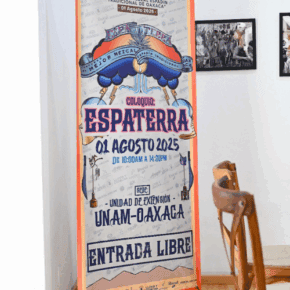
COMERCAM Meeting in Oaxaca

We got a heads up on a big COMERCAM meeting happening in Matatlan, Oaxaca this Saturday (full article here.) We are especially interested in this as some pretty contentious issues will likely be discussed including heavy crackdown on uncertified mezcal (small batch/small production mezcal) being sold into the market, domestic vs export market production, and regulatory controls. We’ll have a complete report next week about the meeting and what it might mean for the mezcal industry, or more specifically, small producers.

Oaxacan agave being sent to Jalisco

Since our last post about rumors of agave being shipped north we’ve heard from another source confirming that 3-4 trucks per day are moving agave north to Jalisco. Since then it’s become a more widely reported phenomenon with this piece and this one as well. Per our earlier post there have  rumors about this for quite some time so, on her recent trip to Oaxaca, Susan asked a number of people in the industry about this issue. No one was surprised. When asked why this isn’t a shock they routinely answer that ‘of course this has always happened.’ This is yet another reason why many in the mezcal business have no respect for COMERCAM and it raises even more questions about NOM 186. This would be a huge scandal in the wine world and pretty much anywhere else with an existing denomination system. We’ve seen the initial outcry among journalists in Mexico, now let’s see if it sinks into the industry and bureaucracy.


In defense of tequila

Patricia Colunga has a provocative opinion piece in today’s La Jornada on tequila, NOM-186, and the battle over denominación de origen for agave distillates in Mexico.

Update: Here’s a quick translation of Patricia’s piece by Elliot Heilman:


IN DEFENSE OF THE TEQUILA APELLATION OF ORIGIN

Patricia Colunga GM1

Translation by: Elliot Heilman

Tequila – our national drink, pride of Mexico worldwide. If a foreigner asks us about it, the majority of Mexicans could tell him or her that it is a traditional, high-quality liquor from the region of Tequila in the state of Jalisco, where the famous blue agave is cultivated….but…is it really so simple?

Perhaps you do not know, but the prestigious name “Tequila,” according to its Appellation of Origin (DO) [a title which should protect it from imitators], can be legally used for drinks that imitate the original and traditional Tequila, which has been produced exclusively from blue agave since 1964. These imitated or adulterated drinks represent 55% of the legal production of the Tequila industry and 66.3% of all exports (statistics taken from the Regulatory Council for Tequila from 2012). These liquors are distilled with just 51% blue agave sugar, using up to 49% “other sugars.”

But you are not the only one who may not realize this. The majority of people do not know, nor can they know, because the producers and bottlers of “Tequila” are not legally obligated to put such information on their labels (nor, of course, do they do so voluntarily) – neither the percentage of sugars used apart from blue agave, nor even where they got these other sugars from (even though we believe it is from cane sugar, the cheapest).

Only when it is produced exclusively from blue agave may a liquor be called “Tequila 100% Agave,” but here we also have another problem concerning information and prestige. Since there are around 200 species of plants from the genus Agave, of which at least 38 are used in Mexico to make various other drinks (mezcal), using the label “Tequila 100% Agave” on such products may lead the consumer to think (incorrectly) that Tequila is made from the sugars of any such species of Agave. This is not in accordance with the Appellation of Origin, whose distinctive sign means that only sugars from the blue agave are used in the distillation.

But the consumer may also be lead to incorrectly assume that in the commercial denomination “Tequila 100% Agave,” the word “Agave” is synonymous with Agave tequilana Weber var. azul – an assumption that is completely false and is detrimental to the liquors distilled from the other 38 species of Agave, which are produced over 26 states in the Mexican Republic.

And how many of us know that the same Appellation of Origin leaves room for this drink, the pride of Mexico, to be even more adulterated when exported? How? By allowing the must to be exported in bulk outside of Mexico where the Tequila Regulatory Council, who make sure that such must is not adulterated, do not have any legal ability to prevent any adulteration.

The Law of Industrial Property makes the Mexican State the holder of the Appellation of Origins. This is to say that the Appellation of Origin belongs to the Mexican State and, therefore, to all of us. It is time to defend ourselves, time to raise our voices so that things will be as they should be, an appellation of origin that guarantees consumers that the liquors they buy with this name are crafted as they have traditionally been, e.g. made only from blue agave – an appellation of origin that stops protected counterfeit liquors, deceivingly labeled and often adulterated even more when shipped abroad – all of which has discredited the good name of Tequila, a name cultivated by artisans for over 200 years and which has been, since 1964, associated solely with a high-quality liquor, made 100% from the blue agave sugars.

Today we have an excellent chance to begin such a defense. One can find in the public record (consulta pública) (until August 14th) the official Mexican regulations project PROY-NOM-006- SCFI-2012, which as specified in the “General Declaration for the Protection of the Tequila Appellation of Origin” is the regulation that defines the characteristics and material allowed in the production of the production protected by the Appellation of Origin.

The proposed changes we have for NOM-006, which will defend the original and traditional Tequila, are:

1) That “Tequila” be defined as a liquor produced from the distillation of musts extracted from Agave tequilana Weber var. azul, to which no other sugars are added, and that “Tequila” no longer allow for musts that are enriched up to 49% with other sugars.

Can you imagine the prestigious name “Cognac” being used for a liquor that use 49% “other sugars” and only 51% sugars from grapes? Of course not! The Cognac Appellation of Origin does not allow this and Cognac is only made 100% from grape sugars.

2) That the obligatory commercial denomination for the liquor distilled solely from blue agave be “Tequila 100% Blue Agave” and not “Tequila 100% Agave” as it is now.

Can you imagine a 100% Cabernet Sauvignon wine labeled only as “100% grape”? No way!

3) That the Appellation of Origin cease to protect those supposed “tequilas” that are distilled from 49% “other sugars,” that the bulk exportation of these “tequilas” be prohibited, and that their labeling regulations include an obligatory declaration of the percentage of “other sugars” used in production, as well as the source of these “other sugars.”

Can you imagine the prestigious name “Champagne” being used for a drink that could be exported in bulk and bottled in the United States or in China, outside the regions protected by the Appellation of Origin? Of course not! Because its Appellation of Origin prohibits it.

It is time to defend the Appellation of Origin. Tequila is a drink that belongs to all Mexicans. We cannot allow this name to continue being used to cheat and con the consumer, thereby discrediting our country.

1 Professor and Researcher at the Yucatan Center for Scientific Study (CICY)

Who wins in the agave labeling battles?

Alberto Barranco’s column in El Universal looks at the vast market opportunity in China as the prime mover behind the maneuvers to restrict how agave distillates are labeled.